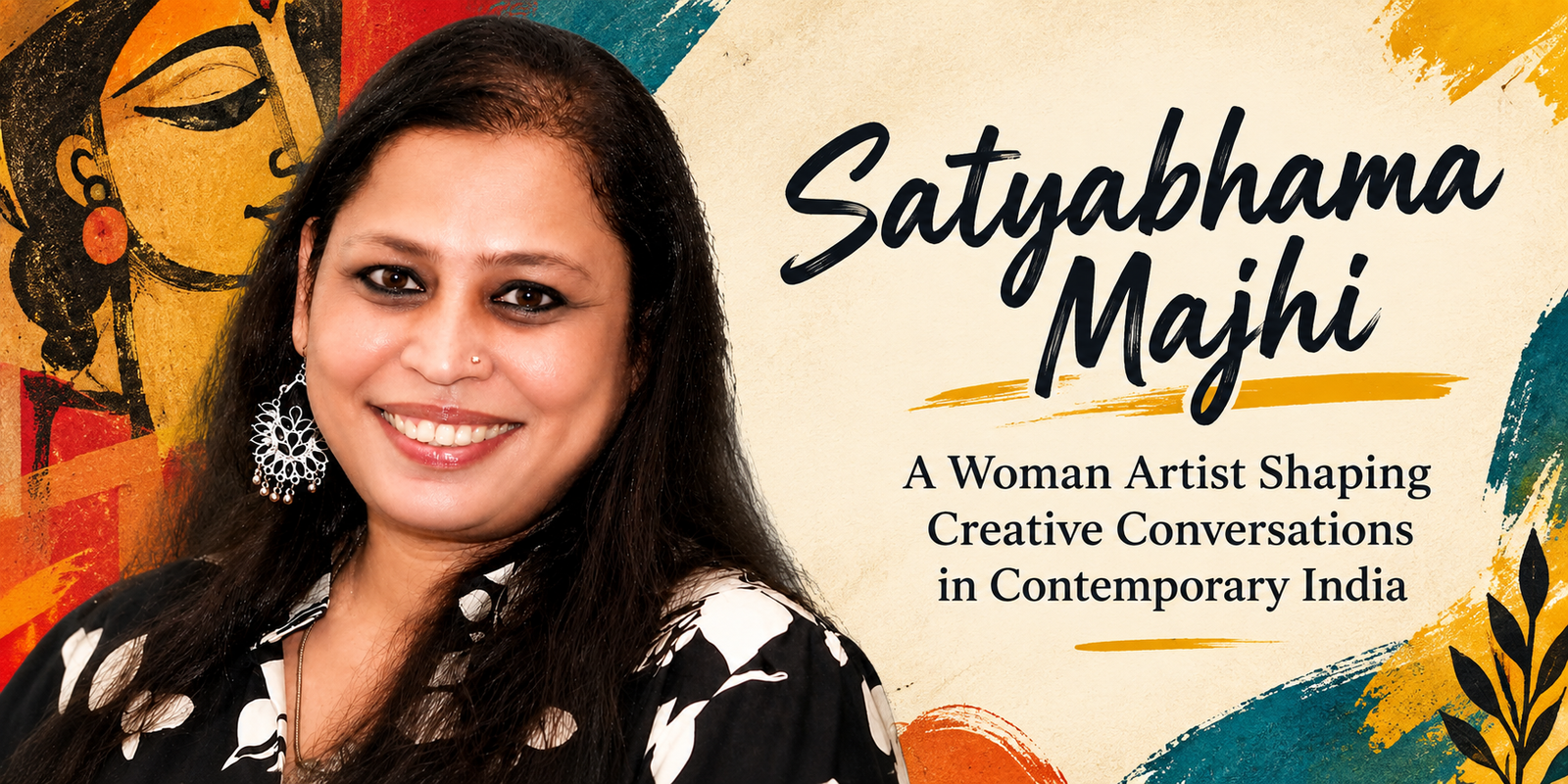
An artist’s identity is rarely formed through a single artwork, medium, or period. It develops gradually through observation, experimentation, education, travel, collaboration, and sustained engagement with people and places. For Odisha-based contemporary artist Satyabhama Majhi, more than two decades of artistic activity have resulted in a multidisciplinary practice that continues to evolve while maintaining strong connections with cultural memory, landscape, community, and everyday life.
Active since the early 2000s, Majhi has worked across painting, sculpture, installation, photography, mixed media, public art, and community-based practice. Her journey demonstrates how an artist can expand creatively without abandoning the experiences and ideas that initially shaped their visual language.
Beginning With Traditional Art
Majhi’s academic background includes an M.F.A. in Traditional Art, providing an important foundation for her later engagement with contemporary practice.
Traditional art education can offer an artist familiarity with established visual forms, techniques, materials, patterns, and cultural references. For Majhi, this foundation became a starting point rather than a boundary.
Over time, her practice moved into broader contemporary territory, incorporating different media and approaches.
The transition illustrates an important characteristic of her artistic journey: tradition and contemporary experimentation are not treated as opposing choices.
Instead, traditional knowledge can become a resource for creating new visual possibilities.
Expanding the Medium
As Majhi’s practice developed, painting became one part of a much wider artistic vocabulary.
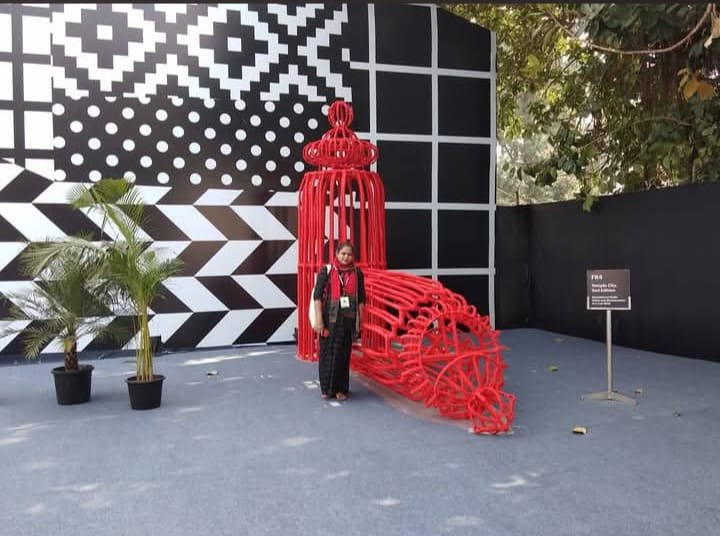
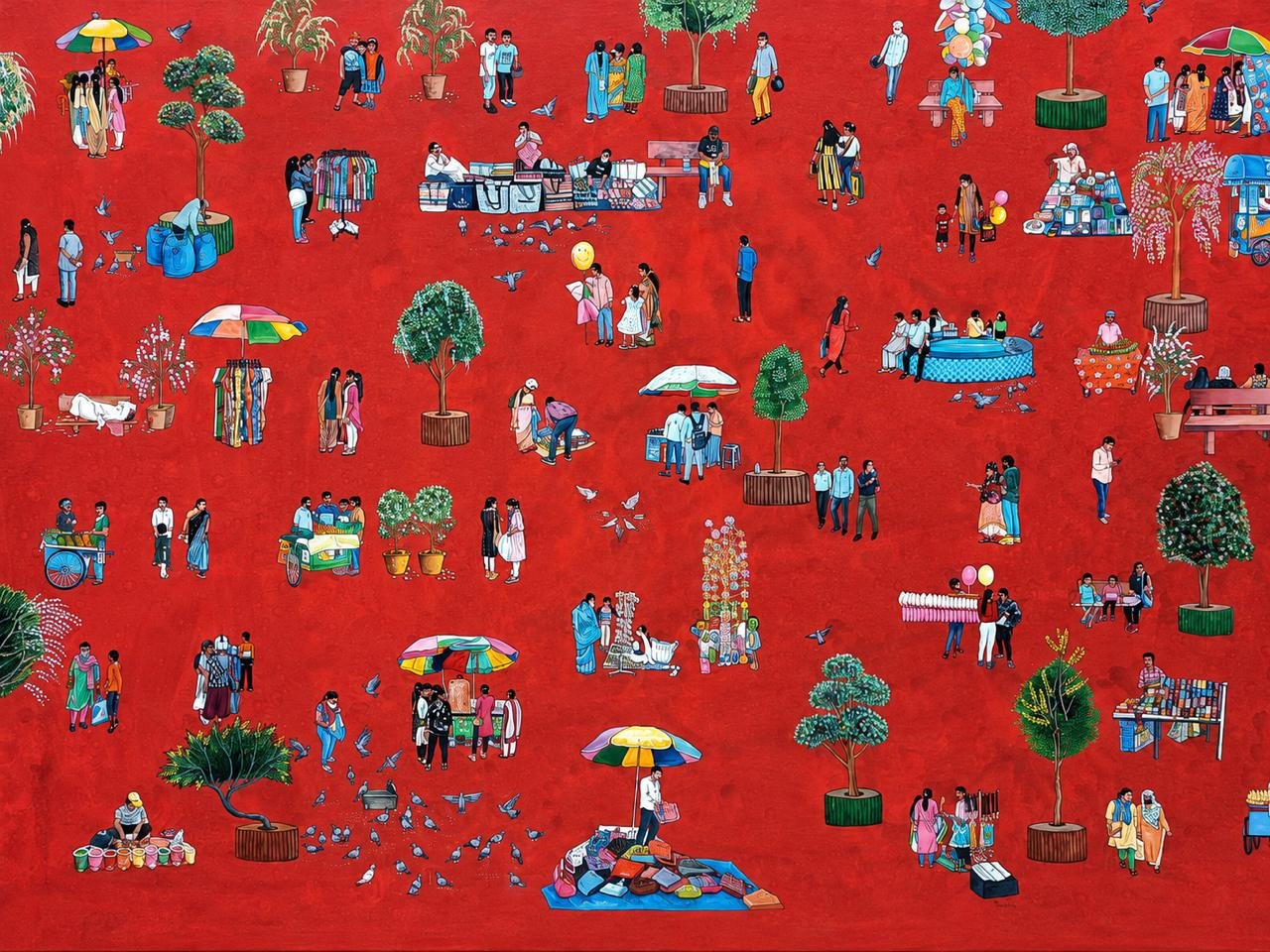
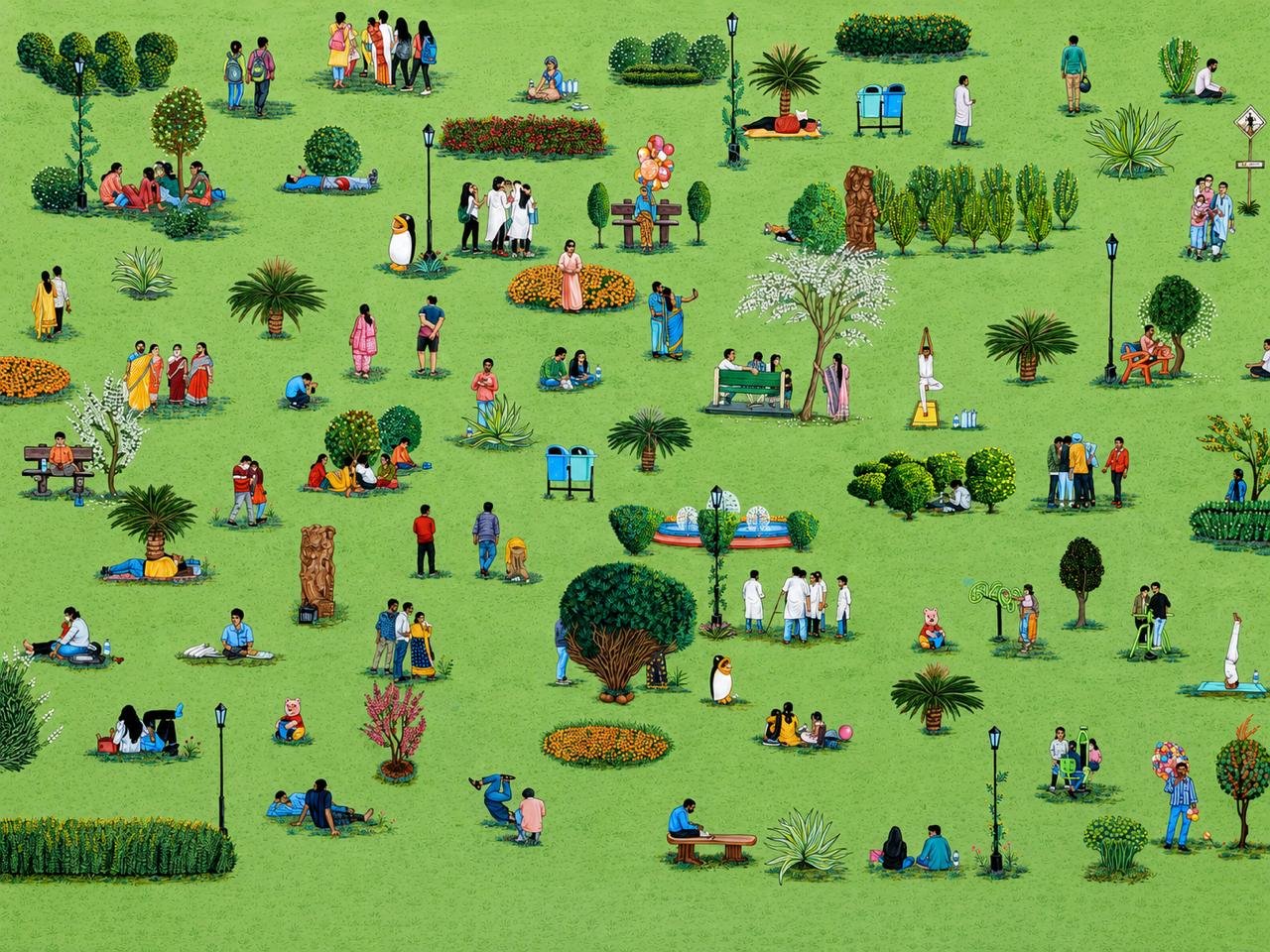
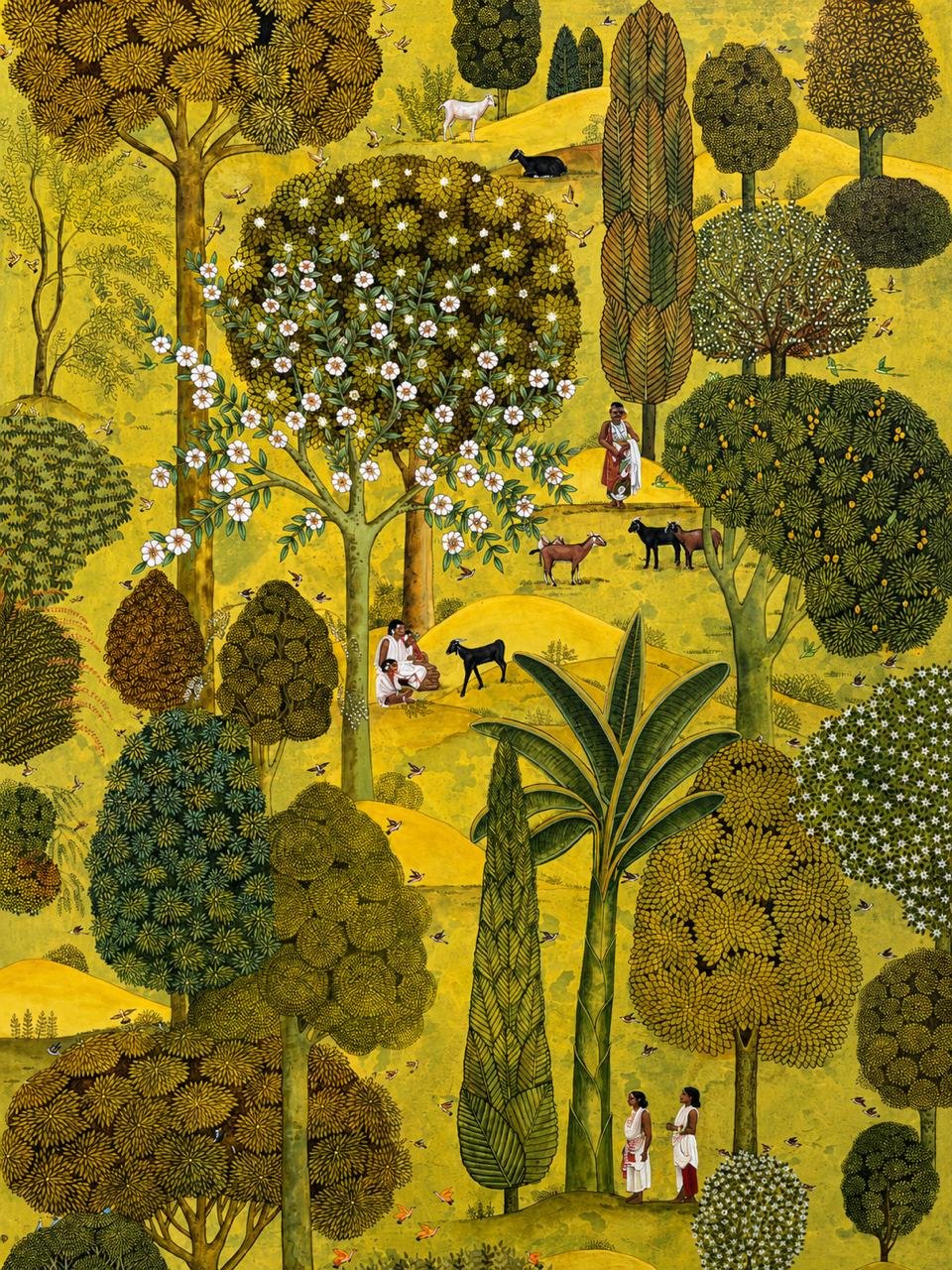
Her work has included sculpture, installation, photography, mixed media, and public art. Each medium offers a different way of responding to an idea or environment.
Painting can provide a space for colour, form, memory, and narrative. Sculpture introduces material and physical presence. Installation can transform the viewer’s relationship with space. Photography can capture or interpret moments and environments. Public art allows artistic expression to become part of shared surroundings.
This multidisciplinary approach has allowed Majhi to move beyond a fixed definition of what her art should look like.
From Image to Environment
One significant development in contemporary artistic practice is the movement from the individual artwork toward the environment in which it exists.
Majhi’s public-art and installation-related activities reflect this shift.
Instead of creating work only for a gallery wall, she has participated in projects involving public spaces, neighbourhoods, community environments, and large-scale murals.
This means that location becomes part of the artwork.
A public mural, for example, interacts with architecture, movement, weather, pedestrians, local memory, and the surrounding community. The artwork changes meaning according to the environment in which people encounter it.
The Influence of Odisha
Although her practice has expanded nationally, Odisha remains an important foundation for Majhi’s artistic identity.
Bhubaneswar provides an urban context shaped by development and changing social environments. Cuttack and other locations have provided settings for public-art projects.
At the same time, rural and indigenous communities have introduced different perspectives on landscape, tradition, livelihood, and cultural knowledge.
These varied environments have contributed to an artistic language that is strongly connected with place.
Niyamgiri and a Deeper Visual Vocabulary
Majhi’s long-term engagement with the Niyamgiri region and the Dongaria Kondh community represents an important stage in the development of her artistic thinking.
Her interaction with the community has involved observing cultural practices, livelihood patterns, indigenous visual traditions, and relationships with nature.
These experiences have influenced recurring forms, materials, and themes.
The landscape of Niyamgiri, for example, has informed her use of triangular forms. The triangle can suggest the mountain silhouette while also carrying associations with stability, sacred geography, landscape, and cultural symbolism.
The form therefore operates beyond simple representation.
Developing a Language of Natural Materials
Another important development in Majhi’s practice has been her engagement with natural pigments.
Materials such as chalk stone, charcoal, turmeric, geru soil, and brown stone have been processed into pigments and incorporated into her artistic work.
This approach brings material and place into a direct relationship.
The materials are connected to the earth and to forms of traditional knowledge, while their use within contemporary art creates opportunities for experimentation.
The evolution of Majhi’s practice can therefore be seen not simply through changing subjects but through changing relationships with material.
From Observation to Interpretation
Majhi’s artistic development has also involved a deeper emphasis on observation.
Her practice often begins with looking closely at people, environments, movement, traditions, and everyday experiences.
The idea of Up and Down, inspired by life around Niyamgiri, demonstrates this process.
The physical movement of going uphill and downhill in daily life becomes a broader metaphor for human movement and the search for changing opportunities and circumstances.
Such works reveal how a specific observation can gradually develop into a larger artistic reflection.
The Expansion Into Community Art
Over time, Majhi’s role has expanded from individual artistic production toward community-based practice.
Her engagement with children, schools, rural communities, indigenous communities, artisans, and public audiences has become an important part of her professional identity.
This expansion changes the artist’s relationship with the creative process.
Instead of always working alone, the artist may become a collaborator, observer, facilitator, or educator.
Community engagement can introduce new perspectives that influence the artist’s understanding of culture, memory, and place.
Art Education as Part of the Journey
Majhi’s approximately fifteen years of engagement with children’s art education further demonstrates this evolution.
Through workshops and educational initiatives, she has encouraged children to observe their surroundings and draw from their own memories and experiences.
Rather than focusing only on technical reproduction, her approach emphasises observation and personal expression.
This work adds an educational dimension to her artistic practice and reflects her broader interest in making creativity accessible beyond professional art institutions.
Public Art and a Wider Audience
Public art has provided another important stage in Majhi’s development.
Her participation in murals and public-art projects in Odisha has allowed her to work at a larger scale and reach audiences beyond traditional gallery visitors.
Projects connected with Cuttack, Bhubaneswar, sporting events, and cultural initiatives demonstrate how artistic practice can interact with public life.
The shift from the studio to the public environment also requires an artist to think differently about scale, visibility, architecture, movement, and audience.
From Regional Practice to National Projects
Majhi’s artistic evolution has also included participation in national-level projects and platforms.
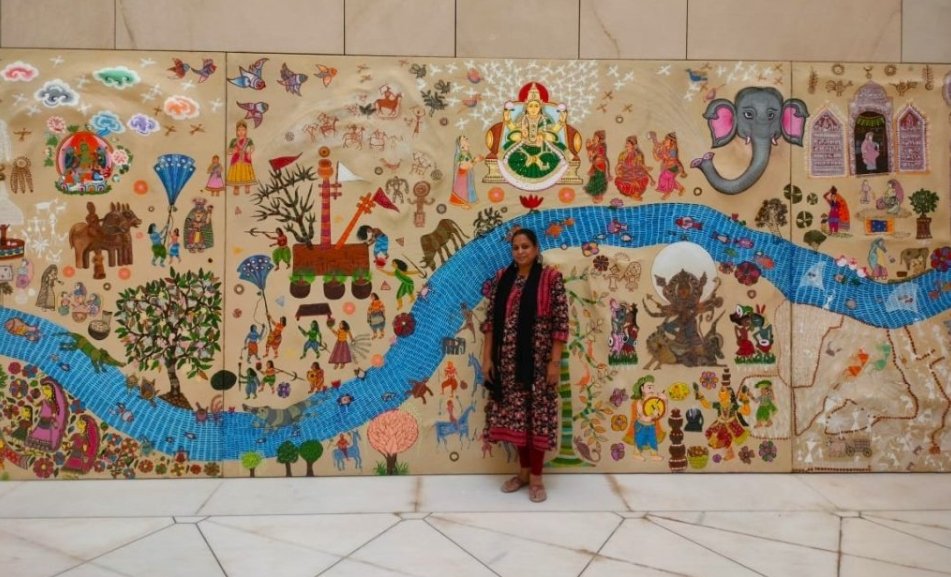
Her role as Co-Sutradhar and creative contributor in People’s Wall – Jan, Janani and Janmabhumi in 2023 represents a significant example.
Created for the New Parliament House through the Lalit Kala Akademi, New Delhi, the collaborative project brought together women artists and artisans from different parts of India.
The project connected regional visual traditions with a national cultural setting.
For Majhi, this reflects a wider trajectory in which experiences rooted in Odisha can contribute to broader conversations about Indian culture and artistic diversity.
Exhibitions, Residencies and New Experiences
Exhibitions and residencies have also contributed to the evolution of Majhi’s practice.
Her artistic activities have included platforms associated with Bharat Bhavan in Bhopal, Nature Morte in Gurgaon, Lalit Kala Akademi, Odisha Lalit Kala Akademi, Bhubaneswar Art Trail, and other exhibition and project contexts.
Residencies and collaborative initiatives have introduced additional opportunities to encounter artists, communities, environments, and artistic approaches from different regions.
Such experiences can expand an artist’s visual vocabulary while strengthening awareness of their own cultural context.
The Artist as Curator and Facilitator
Majhi’s development has not been limited to making artworks.
Her role as a curator and cultural facilitator represents another stage in the expansion of her professional practice.
Through cultural initiatives and her association with the Sasatwa Foundation, where she serves as Secretary, she has participated in activities involving communities, educational institutions, artists, and cultural environments.
This wider role reflects the changing nature of contemporary art itself.
The contemporary artist can operate simultaneously as creator, curator, educator, collaborator, and facilitator.
Continuity Within Change
Despite the expansion of her practice, certain ideas remain consistent.
People, place, landscape, cultural identity, memory, ecology, traditional knowledge, and community participation continue to appear across different stages of her work.
This continuity is important.
Artistic evolution does not necessarily mean abandoning earlier concerns. Instead, an artist can revisit the same questions through new materials, different environments, and changing perspectives.
Majhi’s journey illustrates this process clearly.
Conclusion
Satyabhama Majhi’s artistic journey over more than two decades can be understood as a process of continuous expansion.
Beginning with a foundation in traditional art education, she has developed a multidisciplinary contemporary practice that includes painting, sculpture, installation, photography, mixed media, public art, education, community engagement, and curatorial activity.
Her engagement with Odisha, particularly urban environments, rural communities, and Niyamgiri, has provided an enduring connection with place. Natural pigments and indigenous visual references have expanded her material and symbolic vocabulary, while public art, education, and collaborative projects have broadened her relationship with audiences.
The evolution of her practice demonstrates that an artistic language does not need to remain static to retain its identity.
It can grow through experience.
It can move from canvas to wall, from studio to community, from local landscape to national cultural space, and from individual observation to collective participation.
For Satyabhama Majhi, this continuing evolution has produced a contemporary practice rooted in Odisha while remaining open to wider artistic and cultural conversations across India.