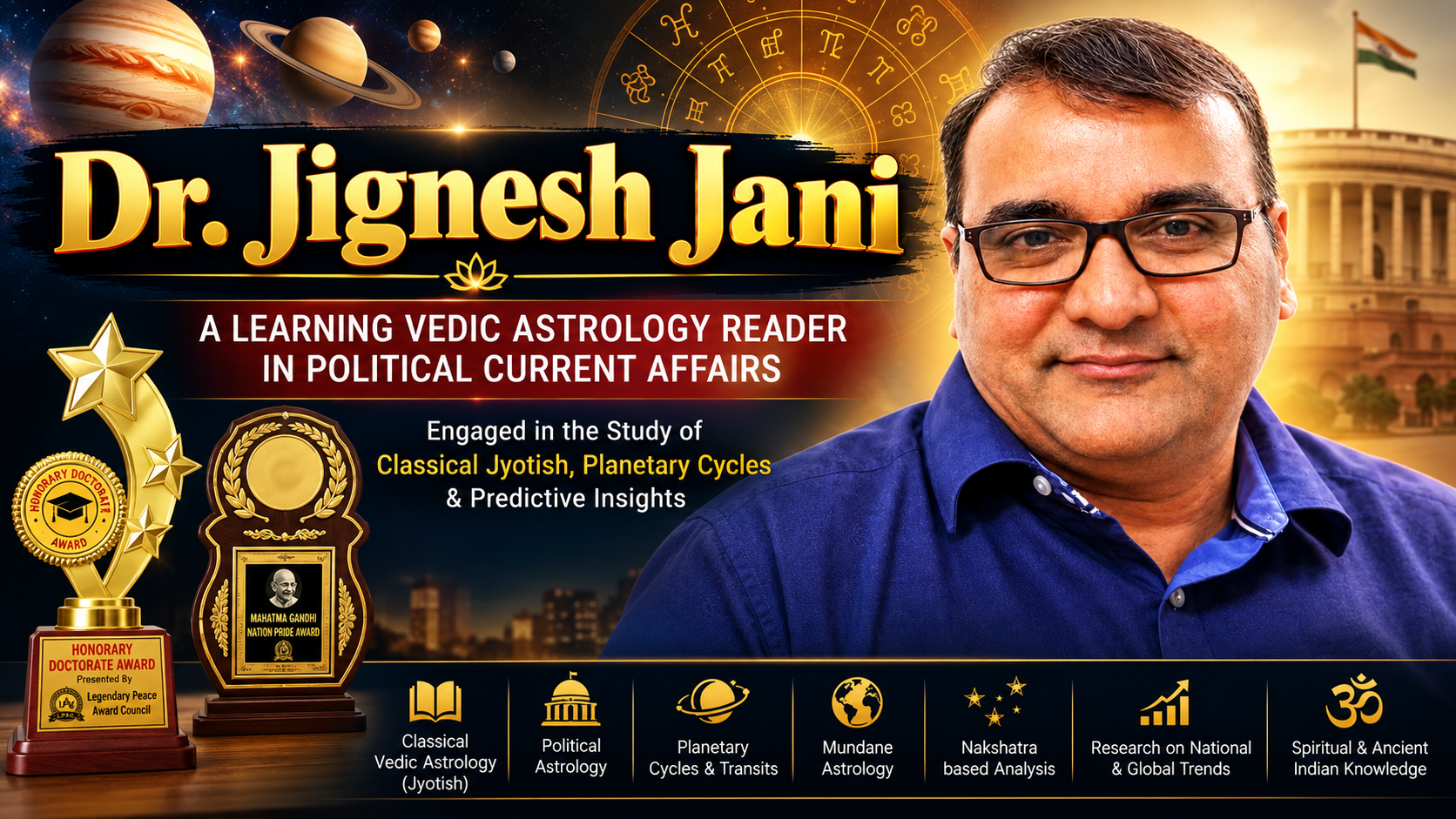
Ahmedabad | July 10, 2026: Vedic astrology researcher Jignesh Jani has emphasized that while Vedic astrology offers a rich tradition of symbolic interpretation, it should not be regarded as a scientifically established method for forecasting geopolitical events or military outcomes. Sharing his views on the current global environment, Jani encouraged the public to distinguish between traditional astrological beliefs and evidence-based analysis of international affairs.
According to Jani, Vedic astrology has been practiced for centuries as a system that studies planetary movements and their symbolic association with collective human experiences. Many astrologers interpret planetary alignments as representing broader themes such as transformation, leadership, diplomacy, and social change. However, he stressed that these interpretations are philosophical in nature and should not be viewed as factual predictions.
Jani referred to the current Mars–Rahu conjunction, traditionally known as Angarak Yoga, which many Vedic astrologers associate with heightened strategic activity, assertive decision-making, and periods of increased geopolitical tension. He also discussed the Saturn–Neptune alignment, often interpreted as symbolizing institutional reforms, ideological shifts, and changes in global governance.
Highlighting Jupiter’s traditional significance, Jani explained that the planet is widely regarded in Vedic astrology as representing wisdom, ethics, justice, education, and diplomacy. Many practitioners believe Jupiter encourages thoughtful leadership and peaceful dialogue during challenging times.
While acknowledging public curiosity about astrology and world events, Jani reiterated that international developments are influenced by diplomacy, economic policies, political leadership, security strategies, and cooperation between nations. These real-world factors, he said, determine the course of history rather than planetary positions alone.
“Astrology provides a symbolic lens through which some people reflect on broader human cycles,” Jani said. “It is not a substitute for scientific inquiry, factual reporting, or evidence-based geopolitical analysis. The future depends on the actions of governments, institutions, and leaders committed to dialogue and peace.”
Jani concluded by encouraging responsible public discourse and informed understanding of both traditional knowledge and modern geopolitical realities. He expressed hope that international cooperation, diplomacy, and mutual respect will continue to guide global efforts toward stability, peaceful coexistence, and sustainable development.